

Supervisory Officers will learn Primary and secondary strategies to prevent and manage challenging behaviour both with staff and service users. They will understand the Stages of Incident, the value of effective communication and psychological responses to behaviour.
Your Supervisors will learn about the Law in relation to the Use of Force, including Human Rights, Civil Law, current guidance on the use of force and understanding policies and procedures relative to security organisations.
Using recognised NEBOSH / IOSH models Supervisors will learn how to undertake a thorough workplace risk assessments and will understand the importance of accurate recording and reporting of incidents. They will have the skills to undertaken incident reviews constructively and know why reviews contribute to improving safe working practises and keep your policies and procedures fit for purpose.
Your Supervisors will be shown Safe holding and Disengagement techniques suitable for all service users including children, mental health patients and the elderly. The techniques will keep your staff within the framework of the law relating to physical interventions.
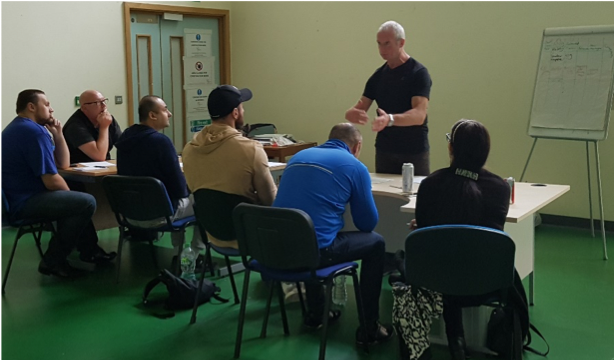
Stages of Incident.
Understanding behaviour including vulnerable groups and mental health
ABC Charting – to share good practise, identify triggers and patterns of behaviour, provide consistency and support each other.
The Law and Physical Intervention and the principle of Last Resort. Recording and reviewing practise.
Contribute to Workplace Risk assessment Workshops and simulated incident investigations and reviews.
Physical intervention disengagement and Safe-holding techniques.
A tactical Supervisory management team capable of proactively managing escalated behaviour and maintaining a safe working environment for your staff and service users.
3 days learning
Safe Schools Level 3 Managing Workplace safely and Prevention and Management of Violence and Aggression.


